"Librarians Build Communities" continues "A Librarian at the Kitchen Table."
After over 10 years this blog in its various manifestations is ending. New blogging on libraries and community will move to the blog, "Librarians Build Communities".
Monday, June 13, 2011


Monday, May 23, 2011
Libraries: Essential Service According to FEMA
Susan Hildreth, IMLS Director writes in Primary Source, May 2011:
See: Robert T. Stafford Disaster Relief and Emergency Assistance Act
Provision of Temporary Relocation Facilities:
Section 403 of the Stafford Act authorizes FEMA to provide Federal assistance to meet immediate threats to life and property resulting from a major disaster. Specifically, Section 403 (a)(3)(D) allows for the provision of temporary facilities for schools and other essential community services, when it is related to saving lives and protecting and preserving property or public health and safety.
The Federal Emergency Management Agency (FEMA) recently established new regulations in Section 403 of the Stafford Act qualifying libraries, along with police, fire protection/emergency services, medical care, education and utilities, as essential community services. The change helps libraries in need to relocate so they can keep serving the public in the wake of a disaster, flood or other emergency.
See: Robert T. Stafford Disaster Relief and Emergency Assistance Act
Provision of Temporary Relocation Facilities:
Section 403 of the Stafford Act authorizes FEMA to provide Federal assistance to meet immediate threats to life and property resulting from a major disaster. Specifically, Section 403 (a)(3)(D) allows for the provision of temporary facilities for schools and other essential community services, when it is related to saving lives and protecting and preserving property or public health and safety.
Friday, April 01, 2011
“Community Building” columns Reference and User Services Quarterly 2000-2006.
“Community Building” columns appearing in
Reference and User Services Quarterly
2000-2006.
========================
“Librarians and Comprehensive Community Initiatives,” McCook, 40 (Fall 2000): 20-22.
“Service Integration and Libraries: Will 2-1-1 be the Catalyst for Renewal?” McCook, 40 (Winter 2000): 22-25.
Community Building and Latino Families,” Villagrán, 40 (Spring, 2001): 224-227.
“Community Indicators, Genuine Progress, and the Gold Billion” McCook and Brand, 40 (Summer 2001): 337-340.
“Collaboration Generates Synergy: Saint Paul Public Library, the College of St. Catherine, and the ‘Family Place’ Program,” Johnson, Brodeen, Humeston, and McGee, ( Fall, 2001): 19-23.
“Authentic Discourse as a Means of Connection Between Public Library Services Responses and Community Building Initiatives,” McCook 40 (Winter, 2001): 127-133.
“Service to Day Laborers: A Job Libraries Have Left Undone,” Jensen, 41 (Spring 2002): 228-233.
“Cultural Heritage Institutions and Community Building,” McCook and Jones 41 (Summer 2002): 20-23.
“The African-American Research Library and Cultural Center of the Broward County Library” Smith, 42(Fall 2002): 21-25.
“Alaska Resources Library and Information Services: Building Community in the Forty-Ninth State” Braund-Allen and. Carle, 42 (Winter 2002): 119-123.
“Sustainable Communities and the Roles Libraries and Librarians Play” Stoss, 42 (Spring 2003): 206-210.
“Using a Homeless Shelter as a Library Education Learning Laboratory: Incorporating Service-Learning in a Graduate-Level Information Sources and Services in the Social Sciences Course” Peterson, 42 (Summer 2003): 307-310.
“Suppressing the Commons: Misconstrued Patriotism vs. a Psychology of Liberation” McCook, 42 (Fall 2003): 14-17.
“Transformations of Librarianship in Support of Learning Communities” Sierpe, 43 (Winter 2003): 120-123.
“ A Passion for Connection: Community Colleges Fulfill the Promise of Cultural Institutions” Bell, 43 (Spring 2004): 206-212.
“Community, Identity, and Literature” Yontz, 443 (Summer 2004): 292-293.
“Public Libraries and People in Jail” McCook, 44 (Fall 2004): 26-30.
A Digital Library to Serve a Region: The Bioregion and First Nations Collections of the Southern Oregon Digital Archives” Cedar Face and Hollens, 44 (Winter 2004): 116-121.
“The Homeless and Information Needs and Services” Hersberger, 44 (Spring 2005): 199-202.
“Building Lead-Free Communities” Stoss, 44 (Summer 2005) p. 289-95.
“Human Rights and Librarians” McCook and Phenix, 45 (Fall 2005): 23-26.
“Poverty, Poor People, and Our Priorities” Gehner, 45 (Wint 2005): 117-21.
"Conspicuous by Their Absence: Academic Librarians in the Engaged University." Westney 45 3 (Spring 2006): 200-203.
"Rebuilding Community in Louisiana after the Hurricanes of 2005." Dawson and McCook 45. (Summer 2006): 292-6.
Tuesday, March 29, 2011
National Center for Children in Poverty
The National Center for Children in Poverty (NCCP) is the nation’s leading public policy center dedicated to promoting the economic security, health, and well-being of America’s low-income families and children. NCCP uses research to inform policy and practice with the goal of ensuring positive outcomes for the next generation. We promote family-oriented solutions at the state and national levels.
Monday, March 21, 2011
Miami-Dade Public Library System joined forces with the county’s Homeless Trust
At a time when resources are shrinking, funding is scarce, and businesses are folding, finding partners to help realize goals is not just an interesting concept but a necessity. To provide support services to formerly homeless individuals and families, many with special needs, the Miami-Dade Public Library System joined forces with the county’s Homeless Trust and Carrfour Supportive Housing, a nonprofit organization that provides permanent housing.
Saturday, March 19, 2011
A Knowledge Exchange - From Data to Impact…

2011 eConference.
A Knowledge Exchange - From Data to Impact…
The Community Indicators Consortium is an active, open learning network and global community of practice among persons interested or engaged in the field of indicators development and application. The mission of the Community Indicators Consortium is to:
• Advance the art and science of indicators;
• Facilitate the exchange of knowledge about the effective use of indicators;
• Encourage development of effective indicators;
• Foster informed civic and media discourse about local, regional, national, and global priorities.
Wednesday, January 26, 2011
Civic Commons and IT Budgets
There is really no local government department that is unable to benefit from a shared environment. Ken Price, information services director for the city of Littleton, Colo., points to public safety,roads and bridges, parks, libraries and museums, among others, that can have technological components — often costly— that are ripe for sharing.
Read about the Civic Commons in the report, Capitalizing on Collaboration: How Shared Services are Saving Local Government Budgets The newly formed Civic Commons group is an organization that aims to empower governments to share technology for the public good. Civic Commons is the brainchild of the nonprofits Code for America, a Teach for America-inspired program for the technology-minded, and OpenPlans, a group focused on civic engagement and open source government software.
The organizations teamed up with Washington, D.C., Chief Technology Officer Bryan Sivak to create Civic Commons — essentially a repository of open civic code for governments to access. “We consistently heard exactly the same thing — we’re all working on the same projects,” Sivak said. So they decided to create a place where these shared projects can be viewed and discussed — the ommons.
A main section of the Commons is the “civic stack,” a shared body of software and protocols for civic entities, built on open standards. Currently included in the stack are iPhone applications like Citizen Reports, an app for reporting and requesting service calls regarding city infrastructure, contributed by Portland, Ore. Also there is an App Store from Washington, D.C.,where people can download or submit applications that use government data — things like parking meter locations,emergency information and historic data. The group has U.S. Chief Information Officer Vivek Kundra on board; he has approved providing the Federal IT Dashboard to the stack.
Jennifer Pahlka, executive director of Code for America, described Civic Commons as a way to help governments share software they have developed, and thereby reduce IT costs, foster collaboration and spur innovation."
Thursday, December 30, 2010
Muncie Library Director Co-Chairs Muncie Action Plan
Virginia Niles demonstrates how librarians can work to build communities.
===========
The poverty rate and median household income are two of the many statistics about Delaware County that jump out of the American Community Survey released this week by the U.S. Census Bureau.
Virginia Niles, Mucie Public Library Director, is Co-Chair of the Muncie Action Plan.
Muncie isn't alone, Nilles says.
===========
The poverty rate and median household income are two of the many statistics about Delaware County that jump out of the American Community Survey released this week by the U.S. Census Bureau.
Virginia Niles, Mucie Public Library Director, is Co-Chair of the Muncie Action Plan.
Muncie isn't alone, Nilles says.
"
"I suspect most communities are seeing this happening, "she said. "Technology has changed everything. Industry is moving to the third world. But it's an exciting time. There are new opportunities. But we have to come together as a community as we have never come together before. If we all do this together, we will be successful. When we have disagreed in the past, we have stood still. We can't afford to do that any more.
Wednesday, December 01, 2010
From Read Ahead to Literacy Coalition: The Leadership Role of the Central New York Community Foundation in the Creation of a Local Institution
Community Literacy Journal
Spring 2011.
From Read Ahead to Literacy Coalition: The Leadership Role of the Central New York Community Foundation in the Creation of a Local Institution
Spring 2011.
From Read Ahead to Literacy Coalition: The Leadership Role of the Central New York Community Foundation in the Creation of a Local Institution
Sunday, November 28, 2010
Elfreda A. Chatman
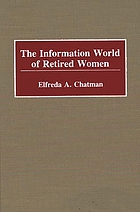
Fulton, Crystal. "An Ordinary Life in the Round: Elfreda Annmary Chatman." Libraries & the Cultural Record 45, no. 2 (2010): 238-59.
Elfreda Annmary Chatman was one of the preeminent library and information science scholars during the 1980s, 1990s, and early 2000s. The influence of her research on the work of other and through her students continues. Focusing her research and theory development on the information behavior of the ordinary people around her, Chatman highlighted the importance of studying everyday life contexts and helped shape the direction of research for many scholars to examine information in everyday life circumstances. Her middle-range theories were intended to enable information researchers to understand the information behavior of individual and group and to facilitate the development of policies and practices to help people experiencing everyday information problems.
Thompson, Kim M.. "Remembering Elfreda Chatman: A Champion of Theory Development in Library and Information Science Education." Journal of Education for Library and Information Science 50, no. 2 (Spring 2009): 119-26.
This article tracks the process of constructing theory within the field of Library and Information Science (LIS) through an examination of Elfreda A. Chatman's research. Chatman notes in her early publications that she did not enter the field with the intent to create theory, but as she applied established theories, she noted that there were certain aspects of the behavior she observed that were not accounted for in the theories she was analyzing. She turned her focus to the social barriers to information access and began to frame her work with concepts and propositions that explained what she observed. By examining Chatman's use of key theories from the social sciences, this article demonstrates the viability of the application and creation of social theory within the LIS discipline.
and more here.
Survival Needs and Social Inclusion: Technology Use Among the Homeless
"Survival Needs and Social Inclusion: Technology Use Among the Homeless."
Jahmeilah Roberson & Bonnie Nardi
Department of Informatics
University of California, Irvine
ABSTRACT
This research reports an ethnographic study of issues
surrounding digital technologies owned and used by
homeless people in Los Angeles County. We identify two
themes—survival and social inclusion—that reveal, in part,
how digital technologies enable social ties for collaboration
in the lives of the homeless.
Author Keywords
Homeless, digital technologies, social inclusion.
pdf is here.
Jahmeilah Roberson & Bonnie Nardi
Department of Informatics
University of California, Irvine
Digital technology use among the homeless is linked to collaborative practices ensuring survival and inclusion in social worlds beyond their immediate communities.
ABSTRACT
This research reports an ethnographic study of issues
surrounding digital technologies owned and used by
homeless people in Los Angeles County. We identify two
themes—survival and social inclusion—that reveal, in part,
how digital technologies enable social ties for collaboration
in the lives of the homeless.
Author Keywords
Homeless, digital technologies, social inclusion.
pdf is here.
Monday, October 18, 2010
Culture is back on the poverty research agenda
The topic has generated interest on Capitol Hill because so much of the research intersects with policy debates. Views of the cultural roots of poverty “play important roles in shaping how lawmakers choose to address poverty issues,” Representative Lynn Woolsey, Democrat of California, noted at the briefing.
This surge of academic research also comes as the percentage of Americans living in poverty hit a 15-year high: one in seven, or 44 million.
This surge of academic research also comes as the percentage of Americans living in poverty hit a 15-year high: one in seven, or 44 million.
Thursday, September 30, 2010
Library services to immigrants: the debate in the library literature, 1900-1920. No. 619.
Worth reading.
Novotny, E. (2005). Library services to immigrants: the debate in the library literature, 1900-1920, and a Chicago case study. Reference and User Services Quarterly, 42, 342-52.
Novotny, E. (2005). Library services to immigrants: the debate in the library literature, 1900-1920, and a Chicago case study. Reference and User Services Quarterly, 42, 342-52.
Monday, September 20, 2010
Education or Exploitation? For-profit schools and working-class students.No. 618.

Commentary from the Center for Working-Class Studies:
Education or Exploitation?
GAO study found clear patterns of deception and pressure in recruiting, and admissions counselors at several schools encouraged applicants to lie on their government financial aid forms.
Saturday, September 11, 2010
Income, Poverty, and Health Insurance Coverage in the United States: 2009. No. 617.
Income, Poverty, and Health Insurance Coverage in the United States: 2009.
The U.S. Census Bureau will hold an online news conference to announce the findings from its annual report: Income, Poverty, and Health Insurance Coverage in the United States: 2009. This report contains the official national findings from the Current Population Survey (CPS).
The Web conference will consist of a simultaneous audio conference and online presentation. There will be no physical event. Information on accessing the Web conference is provided below. Reporters will be able to ask questions via the audio conference once the presentation is complete. For information about setting up an interview with a subject matter expert, see below.
When:
Thursday, Sept. 16, 10 a.m. EDT
Note: Local data for income, poverty and health insurance coverage will be available Tuesday, Sept. 28, when the Census Bureau releases new socioeconomic, housing and demographic data from the 2009 American Community Survey.
The U.S. Census Bureau will hold an online news conference to announce the findings from its annual report: Income, Poverty, and Health Insurance Coverage in the United States: 2009. This report contains the official national findings from the Current Population Survey (CPS).
The Web conference will consist of a simultaneous audio conference and online presentation. There will be no physical event. Information on accessing the Web conference is provided below. Reporters will be able to ask questions via the audio conference once the presentation is complete. For information about setting up an interview with a subject matter expert, see below.
When:
Thursday, Sept. 16, 10 a.m. EDT
Note: Local data for income, poverty and health insurance coverage will be available Tuesday, Sept. 28, when the Census Bureau releases new socioeconomic, housing and demographic data from the 2009 American Community Survey.
Wednesday, September 08, 2010
“Hunger Action Month”. No. 616.
Hunger Action Month.
Hunger, Homelessness & Poverty Task Force
Social Responsibilities Round Table
of the American Library Association
Hunger, Homelessness & Poverty Task Force
Social Responsibilities Round Table
of the American Library Association
Saturday, August 21, 2010
Job-Seeking Help at the Public Library. No. 615.
Job-Seeking Help at the Public Library.
Workforce resources include programs, services, and tools that libraries can use to assist the unemployed in their community. This section also includes information about statewide initiatives and partnerships that help local libraries provide these resources.

Workforce resources include programs, services, and tools that libraries can use to assist the unemployed in their community. This section also includes information about statewide initiatives and partnerships that help local libraries provide these resources.
Monday, July 19, 2010
State of Metropolitan America: On the Front Lines of Demographic Transformation. .No. 614.
Brookings Institution. State of Metropolitan America: On the Front Lines of Demographic Transformation. Brookings Institution. 1775 Massachusetts Avenue NW, Washington, DC 20036.
In the 2101 Brookings Study, the State of Metropolitan America: On the Front Lines of Demographic Transformation the socio-economic context for library service can be characterized in the face of five new realities: 1) growth and outward expansion of metropolitan American; 2) population diversification; 3) aging of the population; 4) uneven higher educational attainment; and 5) income polarization.
Now, as the nation and its major metropolitan areas reach a series of critical demographic junctures, forging a constructive path forward to the “next society” is as much about helping communities manage the velocity of change as it is about responding to its specific character. Failure to maximize shared responses to the inevitable challenges of change, and to promote common ownership of the solutions, will only serve to sow the seeds of intergenerational and inter-racial, inter-ethnic conflict. The resulting polarization, already evident in our national politics, impedes adaptation and the timeless American struggle to form a more perfect union.
Understanding—from the ground up—who Americans are, and who they are becoming, is a critical step toward building those bridges before they become impassable divides. We hope that the State of Metropolitan America proves a useful platform from which to build that understanding.
In the 2101 Brookings Study, the State of Metropolitan America: On the Front Lines of Demographic Transformation the socio-economic context for library service can be characterized in the face of five new realities: 1) growth and outward expansion of metropolitan American; 2) population diversification; 3) aging of the population; 4) uneven higher educational attainment; and 5) income polarization.
Thursday, June 10, 2010
2010 Call for "Real Stories" of Communities. No. 613.

The Community Indicators Consortium (CIC), as part of a grant from the Alfred P. Sloan Foundation, is seeking proposals to write "Real Stories" of communities, organizations, and/or jurisdictions that have tried, successfully and not so successfully, to integrate community indicators and organizational performance measures.
The Real Stories project is intended to provide real life examples of the advantages and challenges to both community indicator and organizational performance measurement projects as a result of integrating or linking these two types of efforts. The published Real Stories, from 5-20 pages in length, will be used to advance the knowledge of community indicators-organizational performance measures integration and for training and other outreach material to community leaders as a way to improve or inform decision-making and create measurable, positive change in communities.
We are looking for proposals from individuals and groups who are directly involved in these efforts as well as individuals and organizations that work with community indicator and performance measurement projects. A stipend of $2,000 will be awarded for each Real Stories published.Three-to-five Real Stories will be selected for publication in 2010.
The deadline for submitting proposals for the 2010 Call for Real Stories is June 22, 2010. Notification of selected proposals and guidelines for development will be sent on July 15th. The deadline for the written first draft is September 15, 2010.
Visit the CIC web site for more information about the Real Stories project and the call for proposals. You can also download the Real Stories Proposal submittal form for more details, or contact the Project Steering committee at CIPM@communityindicators.net
Sincerely,
Allen Lomax and Cheryle Broom
Integrating Community Indicators and Performance Measures Co-Chairs
Monday, June 07, 2010
Hunger, Homelessness, and Poverty Task Force. No. 612.
"Free for All" by Kate Bowman-Johnston.
The public library as a place for transformation.
By Kate Bowman-Johnston.
[The article is accessible online but requires a free registration to the website. Lisa Gieskes, coordinator of the Hunger, Homelessness, and Poverty Task Force of SRRT, is quoted in this article.]
in Sojourners May 2010.
The public library as a place for transformation.
By Kate Bowman-Johnston.
[The article is accessible online but requires a free registration to the website. Lisa Gieskes, coordinator of the Hunger, Homelessness, and Poverty Task Force of SRRT, is quoted in this article.]
in Sojourners May 2010.
Subscribe to:
Posts (Atom)


 Posts
Posts

