Sunday, January 28, 2007

School Librarian Protests for Peace. A Librarian at the Kitchen Table. No. 432.

SacBee.com reports:

"After the first 1,000 U.S. soldiers were killed in Iraq, Lloydene Cook ironed a collage of transfer photos of those who had died onto a military camouflage coat to wear during anti-war protests....One of the photos is of the son of Cindy Sheehan, the well-known "peace mom" whose activism was sparked by the loss of her child in the Iraq war.

During Saturday's peace rally outside Arden Fair mall, Cook hung her well-worn coat on a tree along Arden Way. Instead, she wore a costume of the Grim Reaper, scythe in hand and skull mask covering her face. The 59-year-old school librarian from Rio Linda splashed the words "650,000 dead in Iraq" in white on the front of her black robe.

"People are totally fed up with this war," Cook said. "The government isn't going to do anything about it, so the people are going to take to the streets."


Thousands who shared Cook's view attended rallies and marches planned across the country Saturday to support a national day of anti-war protests.

Read the whole story.

Thursday, January 25, 2007

INCOME INEQUALITY CONTINUES TO WIDEN. ALATKT. No. 431.

Librarians can assist people by using the 2007 Earned Income Tax Credit Outreach Kit

The Center for Budget Policy and Priorities reports:

The Congressional Budget Office recently released extensive data on household incomes for 2004. CBO issues the most comprehensive and authoritative data available on the levels of and changes in incomes and taxes for different income groups, capturing trends at the very top of the income scale that are not shown in Census data.


The new CBO data document that income inequality continued to widen in 2004. The average after-tax income of the richest one percent of households rose from $722,000 in 2003 to $868,000 in 2004, after adjusting for inflation, a one-year increase of nearly $146,000, or 20 percent. This increase was the largest increase in 15 years, measured both in percentage terms and in real dollars.[2]

In contrast, the income of the middle fifth of the population rose $1,700, or 3.6 percent, to $48,400 in 2004. The income of the bottom fifth rose a scant $200 (or 1.4 percent) to $14,700.

The new data also highlight the degree to which income gains over the past quarter-century have become increasingly concentrated at the top of the income scale. Since 1979 — the first year for which the CBO date are available — income gains among high-income households have dwarfed those of middle- and low-income households.

====
2007 Earned Income Credit and Child Tax Credit Outreach Kit
EIC and Child Tax Credit flyer languages. Currently, the following languages are available -- Bosnian, Cambodian, Chinese, French, Hmong, Korean, Polish, Russian, Spanish and Vietnamese. In addition, Arabic, Amharic, Farsi, Haitian-Creole, Italian, Lao, Portugese, Somali, Tagalog and Ukrainian will be available here soon for you to download and reproduce. At your request, we will also mail a hard copy of any of these languages to you. Contact us at eickit@cbpp.org or 202-408-1080 for such requests.

Saturday, January 20, 2007

University-Community Partnerships. ALATKT. No. 430.

At the website, A Librarian at Every Table, and this blog which identifies community roles in which librarians need to become involved, it has been emphasized over the years that librarians should connect with the the scholarship of engagement and the service learning movement.
For more on the importance of service learning and librarianship see: “Service Learning and LIS Education” (Elaine Yontz & Kathleen de la Peña McCook) Journal of Education for Library and Information Science 44(Winter 2003): 58-68.


This upcoming conference provides an opportunity for librarians in higher education to demonstrate work with community partners.

The Community Calls Forth the University

The Fourth Annual University-Community Partnership Conference. July 18-20, 2007.

CALL FOR PRESENTERS
Proposals Due: March 9, 2007
How do communities define engagement with institutions of higher education? Last year, participants of the University-Community Partnership Conference addressed the challenge of engagement as an imperative of the higher education mission. The 2007 event seeks to extend this conversation by exploring the perspective of community partners in the engaged partnership process. What does it mean for communities to choose engagement with higher education? And what are the implications when communities call forth their universities?

Our Keynote Speaker, Alice Lovelace, is considered one of Atlanta's premiere poets. She received her Master's degree in Conflict Resolution from Antioch University and she is a performance poet, playwright, essayist, arts-in-education specialist, and community consultant. She is also currently the 2007 US Social Forum National Organizer. Lovelace's presentation will be followed by facilitated discussion through Story Circles designed to draw forth participants' stories, memories, and reflections on the meaning of authentic engagement.

Plenary speaker Nadinne Cruz, internationally respected speaker, author, and education consultant and former Director of the Haas Center for Public Service, will provide further exploration of the conference theme by sharing the compelling outcomes of the Community Voices project, which she played a key role in facilitating. Throughout our time together, the conference will offer a rich combination of practical and interactive workshops, case studies, best practice presentations, and a Community Partners Resource Fair, all of which will provide participants with multiple learning opportunities to launch their own partnership efforts and to examine critical issues and challenges that are foundational to partnership development and sustenance.


You are invited to listen, respond, lead.


We are soliciting proposals that outline dynamic 45, 60 or 75-minute presentations that are interactive, applied, and lead participants to a concrete outcome. Preference is given to team presentations that include both community and university stakeholders. Specifically, we are interested in the following topical areas:


1. Explore the Mechanics of Building Partnerships. These sessions follow a workshop format that is interactive. Topics may include negotiating objectives that bridge university and community interests; developing memorandums of agreement; sharing risk and other legal matters related to partnership development; clarifying roles and responsibilities;leveraging institutional support; or measuring success. You may specify a participation limit for a Mechanics Workshop.


2. Demonstrate Best Practices in University-Community Partnerships.

Best practices presentations give in-depth descriptions of working partnerships that have already achieved positive results in their communities, and address how the partnership met and overcame challenges on the road to success.


3. Engaged Scholarship. These presentations demonstrate research and teaching initiatives that are substantively rooted in the work of the community and build on community assets.It is expected that 60 and 75 minute presentations will build in a significant amount of time for discussion and question / answer.

To Propose a Workshop, Presentation, or Poster:

1. Complete the cover page. Go to http://www.vtserves.vt.edu to download the Call for Presenters.
2. Write a one-page description of approximately 300 words of the proposed workshop or presentation. Please describe both the content of the session, as well as the format of delivery. Consider the following questions when writing your description: What is your inquiry or theory of change for this project? What community expertise does your partnership leverage? What community need is addressed? How do you demonstrate impact? How far are you in the process with this partnership?
3. Include a one sentence description of all session presenters that may be included in the conference program.
4. Send five paper copies or an electronic copy of the proposal to:


Michele James-Deramo
Conference Planning Committee Chair
Virginia Tech Service-Learning Center
202 Major Williams (0168)
Blacksburg, VA 24061
E-mail: deramo@vt.edu


Timeline:

Call Announced: January 3rd, 2007

Proposals Due: March 9th, 2007

Selections Made By: April 6th, 2007

Presenters Notified By: April 13th, 2007

For questions, contact Michele James-Deramo at 540/231-6947.


--


2006 Conference.

Monday, January 15, 2007

Rev. Dr. Martin Luther King Jr. A Librarian at the Kitchen Table. No. 429.

NAACP Participates in Nationwide Activities Honoring Dr. Martin Luther King Jr.

“Unacceptable” is how the NAACP describes the performance of members of the U.S. Congress in addressing fundamental civil rights agenda items in the last two years. In its final Legislative Report Card on the 109th Congress (which adjourned Dec. 9, 2006) the NAACP found only slight improvement in the voting record among members of both chambers. The majority of U.S. Senators (54 out of 100) and Representatives (225 out of 435) voted in support of the NAACP’s position less than 59 percent of the time, receiving a grade of “F” from the NAACP.

“This report confirms that there is a lack of alignment between the priorities of the communities the NAACP was founded to serve and the majority of the members of Congress,” said NAACP President & CEO Bruce S. Gordon. “While we celebrated some hard-earned victories, more often than not policy makers failed to address issues that continue to burden our communities. While we are disappointed, we are also determined. We will continue to hold our Association accountable for engaging our senators and representatives, advocating on behalf of our people and relentlessly pursuing our mission until we succeed.”

Since 1914 the NAACP Legislative Report Card has presented a summation of key civil rights votes taken in the U.S. Senate and House of Representatives. It is designed to provide NAACP members with insight into the voting patterns of their congressional representatives.

“The latest legislative report card shows how members voted on 28 key votes in the Senate [out of a total of 645 recorded votes in the entire 109th Congress] and 36 priority votes in the House of Representatives [out of a total of 1,214 cast in the entire 109th Congress],” said NAACP Washington Bureau Director Hilary O. Shelton. “Votes on topics like the minimum wage, health care, budget issues, education, gun control, voting rights, low income energy assistance, community development, criminal justice and trade are included in the assessment. Legislation that did not progress beyond the committee level is not included in the assessment.”

Thirty-six senators voted with the NAACP 90 to 100 percent of the time receiving an “A” grade, while 16 received a “B” grade for voting with the NAACP 80-89 percent of the time. Three senators received a “C” and one a “D.” There are 14 Senators that rarely vote with the Association. The average score of all the senators was 49 percent, up 2 percent from the mid-term average.

In the House, 176 representatives voted in support of the NAACP’s position 90 to 100 percent of the time receiving an “A” grade. Forty-one representatives earned Bs from the NAACP while 15 received Cs. Eleven received Ds. The average score in the House was 58 percent, also up 2 percent from the mid-term average.

Shelton added, “The NAACP is heartened to see that each of the incoming chairs of committees for the 110th Congress in both the Senate and House, earned an A grade, while each of the outgoing chairs from the 109th Congress received an F. If this is an indication of things to come in the 110th Congress, we have much to look forward to. “

As each Congress lasts two years, the NAACP Legislative Report Card is issued at the end of the first year offering a mid-term assessment; and at the close of the second year where a final grade is presented. View the complete report card, including scores of individual members of Congress.

Thursday, January 04, 2007

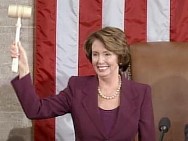
Nancy Pelosi. Through the Marble Ceiling! ALATKT. No. 428.


"When my colleagues elect me as speaker on Jan. 4, we will not just break through a glass ceiling, we will break through a marble ceiling.... In more than 200 years of history, there was an established pecking order - and I cut in line."

--Nancy Pelosi, Speaker of the House

First day--January 4, 2007 for DEMOCRAT speaker, Nancy Pelosi.

Video and article at Alternet

Wednesday, January 03, 2007

Responding to Anti-Immigrant Sentiment: ALATKT. No. 427.

Librarian’s Toolkit for Responding Effectively To Anti-Immigrant Sentiment.

Many librarians across the United States are struggling to provide or continue to provide adequate library service to Latinos and other immigrants in the face of anti-immigrant sentiment that serves to dehumanize and criminalize family members and workers who seek a better life for themselves and their loved ones in the United States. REFORMA, the National Association to Promote Library and Information Services to Latinos and the Spanish-Speaking, strives to be at the forefront of the effort to educate the general public about the communities we serve and to advocate for and seek to protect Latinos’ rights to decent library service. As librarians and library workers, we pride ourselves on access to relevant information.

In that vein, we offer these materials for use by library administrators, staff, and all other interested parties in an effort to enlighten, inform, and expand their knowledge of immigrants and their rights to free public library access.

RESOLUTION IN SUPPORT OF IMMIGRANTS’ RIGHTS TO FREE PUBLIC LIBRARY ACCESS

Monday, January 01, 2007

Serving New Immigrant Communities in the Library. ALATKT. No. 426.


Serving New Immigrant Communities in the Library

--by Sondra Cuban.

Build strong bridges with new members of your community. With this insightful guide, you will learn how to assess your current organizational performance with immigrants, gather data, and use that information to gain support for organizational initiatives. You will also discover how to adapt policies to better fit changing needs, overcome language barriers, develop public relations strategies that reach immigrants, and build culturally relevant collections, services, and programs for a changing community. Filled with quotes, anecdotes, and profiles from the author's research with immigrant communities, the book provides both a positive vision and practical plan for serving immigrants in your library, school, or organization.
Libraries Unlimited. 2007.
LC Card Number: 2006036843

SONDRA CUBAN is a Lecturer in the Department of Educational Research at Lancaster University, England. A former ESOL and ABE teacher, she also worked as a librarian in Hawai'i.